
There are plenty of things you can leave until the final weeks before your wedding. Your seating chart. The emergency kit. Deciding whether you really need a second pair of shoes.
Pre-wedding cosmetic treatments are a little different.
If anti-wrinkle injections, filler, laser, microneedling or skin boosters are part of your wedding beauty plans, when you have them can be almost as important as what you have done. Start too late and you leave little room for treatments to work, swelling or bruising to settle, or your practitioner to make adjustments.
“The biggest thing I tell patients when they’re preparing for a wedding is not to suddenly start experimenting close to the day,” says Dr Phoebe Jones, cosmetic physician, co-founder and Medical Director of Sydney’s Beauty by Doctor.
Her approach to bridal cosmetic treatments is less about throwing everything at your skin before the wedding and more about working backwards from the date. Starting early gives you time to create a considered treatment plan, see how your skin responds and make gradual changes.
“We want enough time to create a treatment plan, see how your skin responds and make gradual changes so that you look like the best version of yourself, just refreshed and glowing, with really healthy skin.”
So, when should you book cosmetic treatments before your wedding? From first-time anti-wrinkle treatments to filler, laser and the point when you really should leave your face alone, this is Dr Jones’ ideal wedding cosmetic treatment timeline.
12 Months Out: Start Your Pre-Wedding Cosmetic Treatment Plan
If you have a year until the wedding, you’re in the sweet spot.
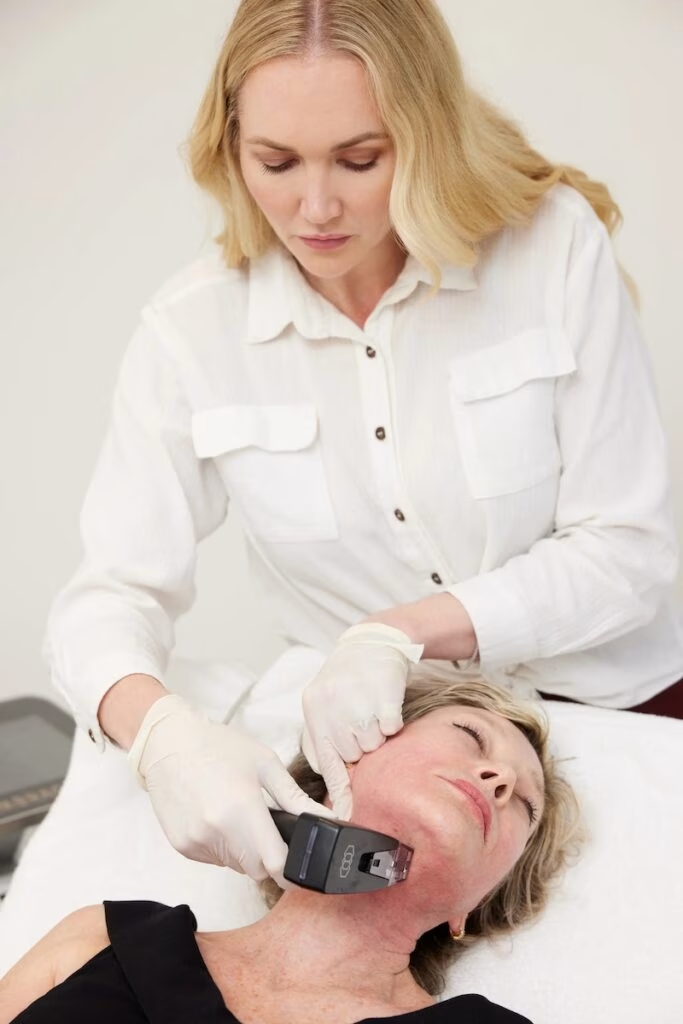
This is the time for a proper consultation and a pre-wedding cosmetic treatment plan, rather than booking individual treatments because you’ve seen them on TikTok. A practitioner can look at what you actually want to address, whether that’s pigmentation, acne, melasma, scarring, texture, skin laxity or overall skin quality, and work backwards from your wedding date.
Conditions such as acne and melasma rarely lend themselves to a single quick fix, so having 12 months means treatments can be introduced gradually and adjusted according to how your skin responds.
Depending on the individual, Dr Jones says a longer-term plan could include regular facials, skin needling or laser facials at four-to-six-week intervals, alongside appropriate home skincare. That might include daily SPF, personalised active ingredients and, where clinically appropriate, prescription topicals such as hydroquinone or tretinoin.
When should you start anti-wrinkle treatments before your wedding?
If you’re considering anti-wrinkle treatment for the first time, this is a much better moment to start than four weeks before the wedding.
Beginning well in advance gives your practitioner the opportunity to see how your face responds and refine the dose and placement over subsequent treatments.
As Dr Jones puts it: “Nothing worse than a frozen face on a bride.”
What about collagen-stimulating treatments?
These belong at the beginning of the timeline, too.
For more mature brides, or those who have experienced volume loss or skin laxity following significant weight loss or GLP-1 use, Dr Jones recommends starting collagen-induction treatments well in advance because it takes many months for the body to produce collagen.
Depending on the patient, a treatment plan could include biostimulators such as Sculptra, Juvelook or Gouri, Morpheus8 RF microneedling, SkinPen microneedling with bioregenerative serums such as exosomes, or UltraClear laser resurfacing.
UltraClear can also be used in different modes to address resurfacing, tightening and actinic damage, making it an option Dr Jones considers for more mature or sun-damaged skin. And it’s not just about the face. The décolletage can be treated too, something worth considering if your wedding dress puts that area front and centre.
At Beauty by Doctor, the Luminary Club also allows patients to create a bespoke 12-month plan around their goals, timeframe and budget, appropriately spacing and combining treatments throughout the year.
9 Months Out: Build On What’s Working
At nine months, your bridal cosmetic treatment plan should be less about adding something new and more about building on what is already working.
For someone undertaking collagen-stimulating treatments, this could mean subsequent sessions of a biostimulator such as Sculptra, Juvelook or Gouri, Morpheus8 RF microneedling or UltraClear.
If pigmentation, melasma or redness is the concern, treatment may continue with an appropriate combination of laser and prescription skincare.
The advantage of starting early is that there’s no need to chase an overnight transformation. Your practitioner has time to assess how you’re responding, adjust the plan where necessary and allow collagen production and skin remodelling to happen gradually.
6 Months Out: There’s Still Plenty Of Time
Wedding in six months and haven’t started? Don’t panic.
Six months is still a useful window for making meaningful improvements to skin quality. The difference is that your practitioner may need to prioritise the pre-wedding cosmetic treatments most likely to make a difference to your particular concerns rather than trying to squeeze a 12-month plan into half the time.
For anyone already following a plan, this is also a useful checkpoint. Are things progressing as expected? Does anything need adjusting? Are you on track to peak at the right time?
It can also be a good time to review anti-wrinkle treatment and make subtle adjustments if required.
When should you get filler before your wedding?
If cheek or lip filler is something you’re considering, Dr Jones prefers experimenting at around the six-month mark rather than leaving it until the final weeks.
It gives swelling and bruising plenty of time to disappear and, importantly, lets you live with the result well before the wedding. For brides who have lost facial volume following dieting or weight loss, volume replacement may also be considered at this stage alongside earlier collagen-induction treatments.
If filler is completely new to you, six months also gives you far more breathing room than making a significant change close to the wedding.
3 Months Out: Stop Reinventing, Start Refining
Three months to go. The dress fittings are getting serious, the group chat is getting busier and, as far as your face is concerned, the experimentation phase should be coming to an end.
“By three months, I generally want to be refining rather than dramatically changing anything,” says Dr Jones.
This is when pre-wedding skin treatments can start shifting towards hydration and glow. Depending on the patient, treatments such as Sunekos, Profhilo or other skin boosters can be used to plump the skin, help with fine lines and improve hydration and overall skin quality.
There’s a social benefit to timing them here, too. Engagement parties, hens celebrations and long lunches tend to multiply as the wedding approaches. Dr Jones likes hydrating treatments during this period to help skin continue to look fresh through the celebrations.
Lower-downtime treatments such as non-ablative laser facials may also continue.
Any filler at this stage should be conservative and ideally something you’ve had previously and already know you respond well to.
What Dr Jones doesn’t want to be doing now is dramatically overhauling prescription skincare. By three months out, the goal is a healthy, predictable and settled skin barrier rather than discovering shortly before the wedding that your ambitious new routine makes your face peel.

1 Month Out: The Finishing Touches
With four weeks to go, the strategy changes again. Now it’s about calm, hydrated, healthy-looking skin with as little risk of unexpected downtime as possible.
When should you get anti-wrinkle treatment before your wedding?
For patients who regularly have anti-wrinkle treatments and already know how they respond, Dr Jones prefers the final appointment at around four weeks before the wedding.
That gives the treatment time to settle and leaves a buffer for a review or tweak if necessary, rather than having treatment only days before an important event.
A gentle, non-ablative laser facial may also be considered at this stage for overall skin quality, redness and brightness, while LED treatments can be incorporated into the final lead-up.
For an appropriate patient, Dr Jones may also consider Profhilo at this point as an “icing on the cake” treatment, providing subtle plumpness and hydration and improving overall skin quality without dramatically changing facial shape.
Is one month before your wedding too late for filler?
If it’s your first time, Dr Jones wouldn’t recommend it.
Even when filler is performed correctly, swelling and bruising can occur. There’s little reason to introduce that uncertainty when the wedding is only weeks away.
Save the experiments for after the honeymoon.
1 Week Out: Leave Your Face Alone
If you’ve been following a wedding cosmetic treatment timeline for the past year, the final seven days may feel strangely uneventful.
That’s exactly how Dr Jones wants it.
This isn’t the time for aggressive lasers, peels, microneedling, new injectables, new prescription skincare or anything else that could potentially cause swelling, bruising, irritation, peeling or unexpected downtime.
LED can be a gentle option because it can support the skin without creating downtime. Otherwise, stick with skincare you already know agrees with your skin, keep it hydrated and protected from the sun, and resist the temptation to try the exciting new treatment or product someone just recommended to you.
“The aim in that final week should really be to leave good skin alone.”
And perhaps that’s the best wedding beauty advice of all.
Your Wedding Cosmetic Treatment Timeline At A Glance
12 months out: Have a consultation and create a treatment plan. This is the time to start addressing longer-term concerns such as pigmentation, acne, melasma, scarring, texture and laxity, and consider beginning laser, skin needling, collagen-stimulating treatments or first-time anti-wrinkle treatment where appropriate.
9 months out: Continue treatment courses, assess how your skin is responding and adjust the plan rather than constantly adding something new.
6 months out: Review your progress and make subtle anti-wrinkle adjustments if needed. If you’re considering cheek or lip filler, this gives you much more time to see and settle into the result before the wedding.
3 months out: Shift towards refinement and hydration. Skin boosters and lower-downtime treatments may be considered, while major changes to a skincare routine that’s already working are best avoided.
1 month out: Think finishing touches. For regular patients, this may include the final anti-wrinkle treatment, gentle laser or LED where appropriate and hydration-focused treatments. Avoid trying filler for the first time.
1 week out: No experiments. Avoid aggressive treatments and new injectables or prescription skincare. Keep skin calm, hydrated and protected.
Wedding Cosmetic Treatment FAQs
How far before your wedding should you start cosmetic treatments?
Ideally, start planning around 12 months before your wedding if you want to address longer-term concerns such as pigmentation, acne, melasma, scarring, texture or skin laxity. Starting early also gives your practitioner time to see how you respond to different treatments and make gradual adjustments rather than introducing something new close to the wedding.
When should you get anti-wrinkle injections before your wedding?
If you’ve never had anti-wrinkle treatment before, Dr Jones recommends starting well in advance so your practitioner can understand how you respond and refine the dose and placement over subsequent appointments. For regular patients who already know their response, she prefers the final pre-wedding anti-wrinkle treatment around four weeks out.
When should you get filler before your wedding?
Around six months before the wedding can be a more comfortable time to consider cheek or lip filler, particularly if it’s new to you. Dr Jones does not recommend trying filler for the first time one month before a wedding because swelling and bruising can occur.
How close to your wedding can you have laser treatment?
It depends on the type of laser treatment and your individual skin. More intensive laser treatments belong earlier in a wedding cosmetic treatment timeline, while a gentle, non-ablative laser facial may be considered around one month out for an appropriate patient. Aggressive laser treatments should be avoided in the final week.
What cosmetic treatments should you avoid the week before your wedding?
Avoid aggressive lasers, peels, microneedling, new injectables, new prescription skincare and other treatments that could cause swelling, bruising, peeling or irritation. The final week before your wedding is about keeping your skin calm, hydrated and predictable.
Is three months before the wedding too late to start skin treatments?
Not necessarily. At three months, the focus should generally be on refinement rather than dramatic changes. Depending on the individual, hydrating treatments such as Sunekos, Profhilo or other skin boosters and lower-downtime treatments may still form part of a pre-wedding cosmetic treatment plan.
Cosmetic treatments aren’t suitable for everyone and carry potential risks. Treatment choice and timing should be determined following an individual consultation with an appropriately qualified health practitioner.