
Wedding flowers are getting wilder, more expressive and considerably less predictable.
After years of meticulously arranged bouquets and carefully coordinated centrepieces, something is shifting. Flowers are no longer simply being chosen to complement the wedding aesthetic; increasingly, they’re creating it.
And for 2027, that means florals with presence.
Couples are becoming braver with colour, more interested in texture and increasingly drawn to floral design that feels organic, artistic and individual.
There is also a move away from the idea that every floral element needs to perfectly match. Instead, the most interesting weddings are mixing flowers with fruit and foliage, playing with scale and negative space, and creating arrangements that feel as though they belong naturally within their surroundings.
From flowers as art to the return of abundant colour, these are the biggest wedding flower trends for 2027.
1. Flowers become art
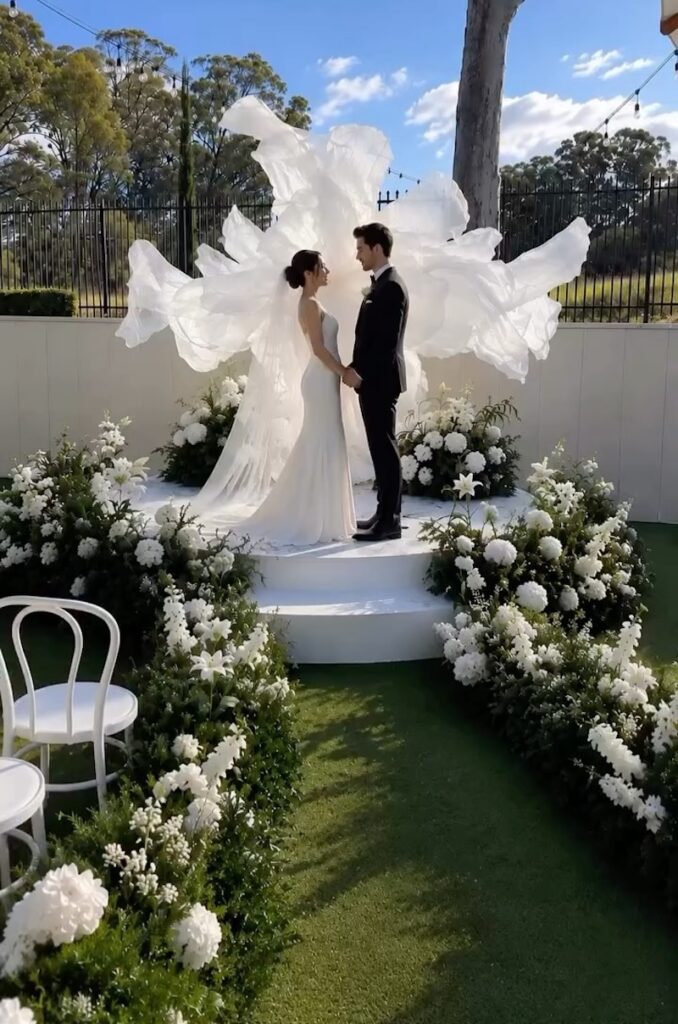
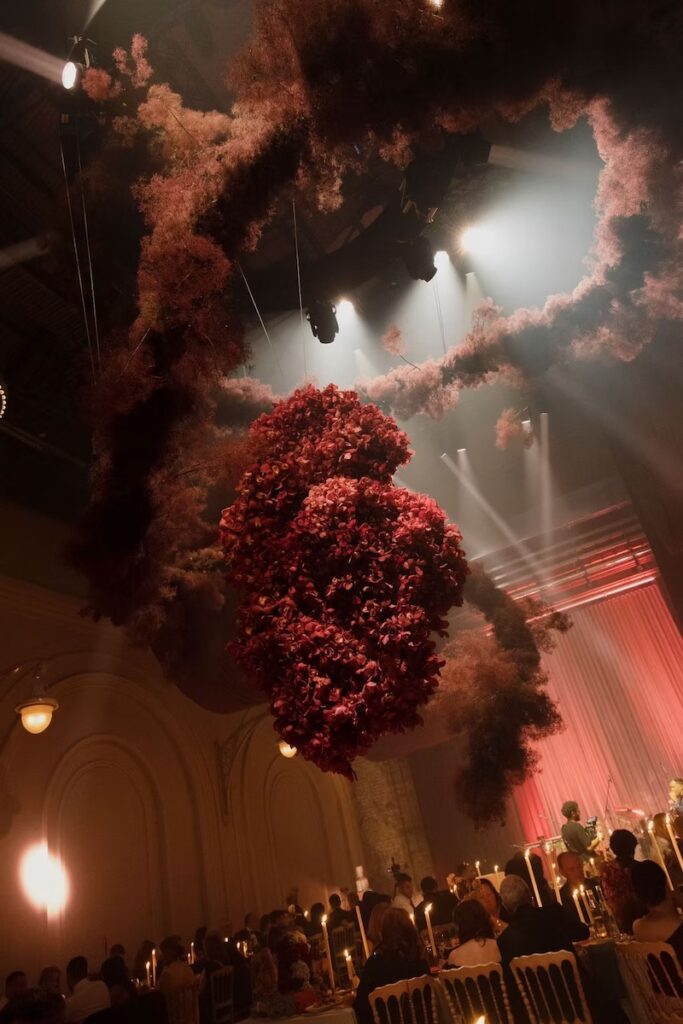
If perfectly manicured florals aren’t quite your thing, 2027 may be your year.
One of the strongest wedding floral trends for 2027 is the continued move towards arrangements that feel loose, abundant and almost accidental.
Think less “centrepiece placed on table” and more “garden that happens to be growing through the reception”.
Meadow-style ceremony aisles will continue to be particularly important, with flowers planted visually at ground level to create the illusion of walking through a field. At entrances, arrangements become larger and more rambling. On tables, stems are allowed to bend, twist and fall naturally rather than being arranged into rigid symmetry.
There’s romance to it, but also a wonderful sense of imperfection.
2. The wild garden takes over
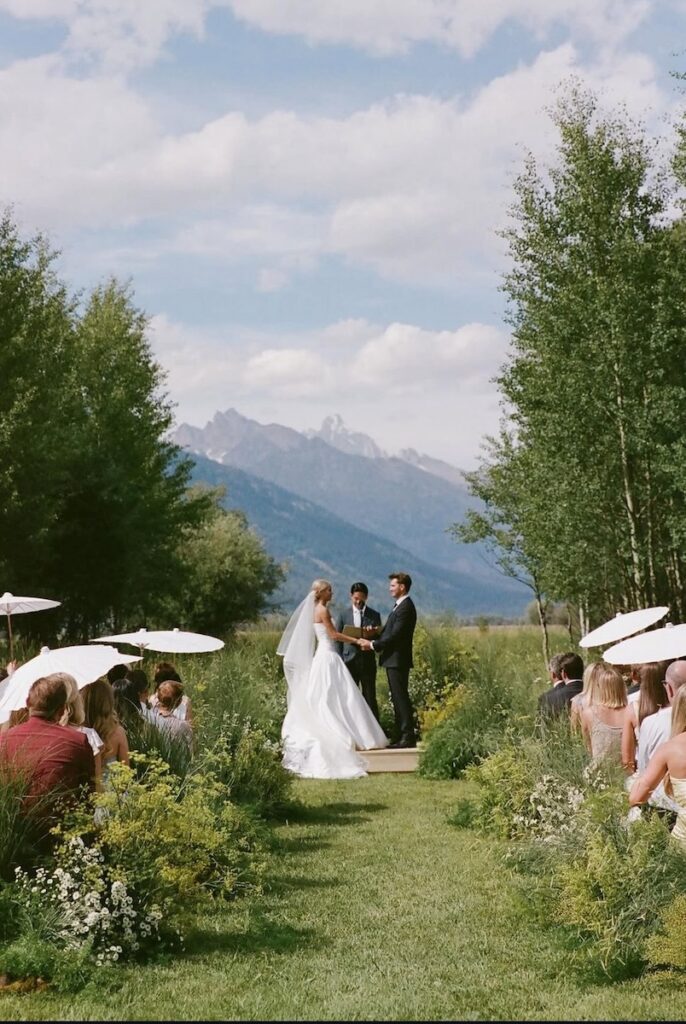
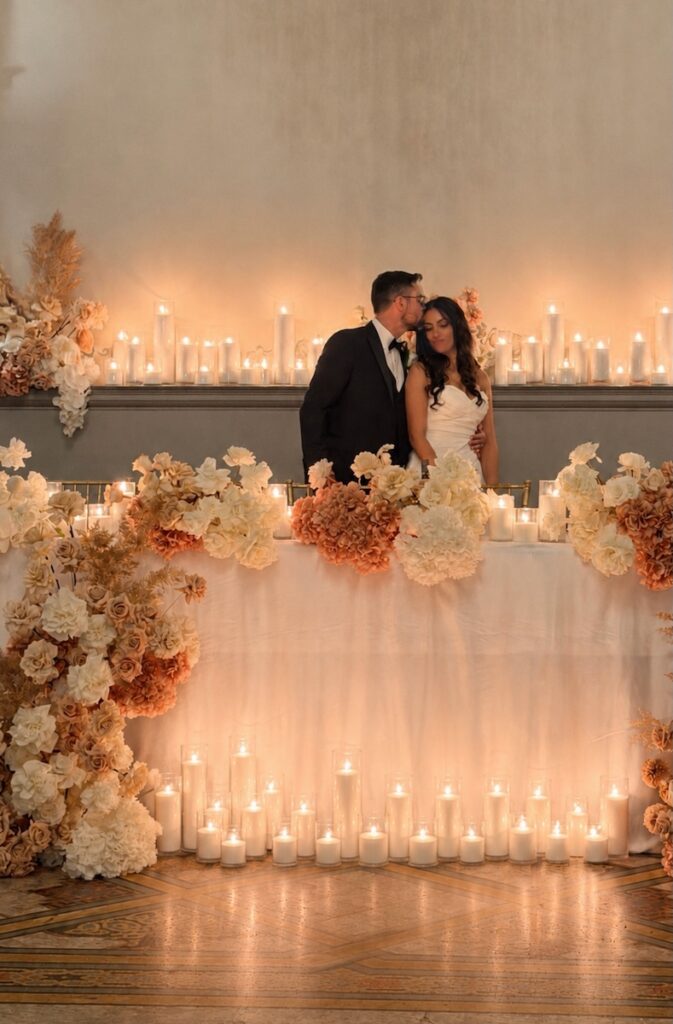
Perhaps the biggest shift in 2027 wedding flowers is one of perspective: flowers are becoming less like decoration and more like an artistic medium.
Rather than simply placing arrangements around a venue, florists are increasingly using flowers to transform the space itself.
Expect sweeping installations that travel across floors, climb structures and spill over tables. Ceremony flowers might emerge organically from the ground rather than sitting neatly inside vessels, while reception installations could hover overhead, snake along tables or create unexpected sculptural moments throughout a room.
It’s floral design with an architectural sensibility.
3. Colour, colour, colour
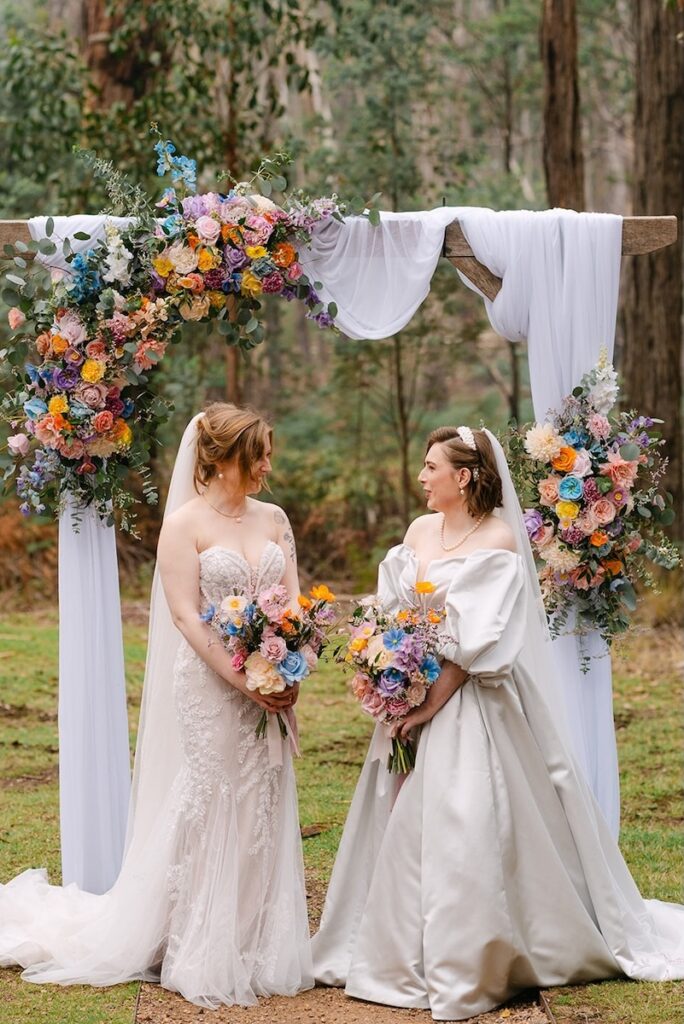
White and green aren’t disappearing from weddings. But they no longer have the room entirely to themselves.
According to our florists, colour will play a much bigger role in wedding flowers in 2027, with couples becoming increasingly confident about moving beyond traditional blush and ivory palettes.
The interesting part isn’t simply that colour is returning. It’s how it’s being used.
Rather than choosing one exact shade and repeating it across every arrangement, florists are creating layered tonal palettes that move through different intensities of the same colour family.
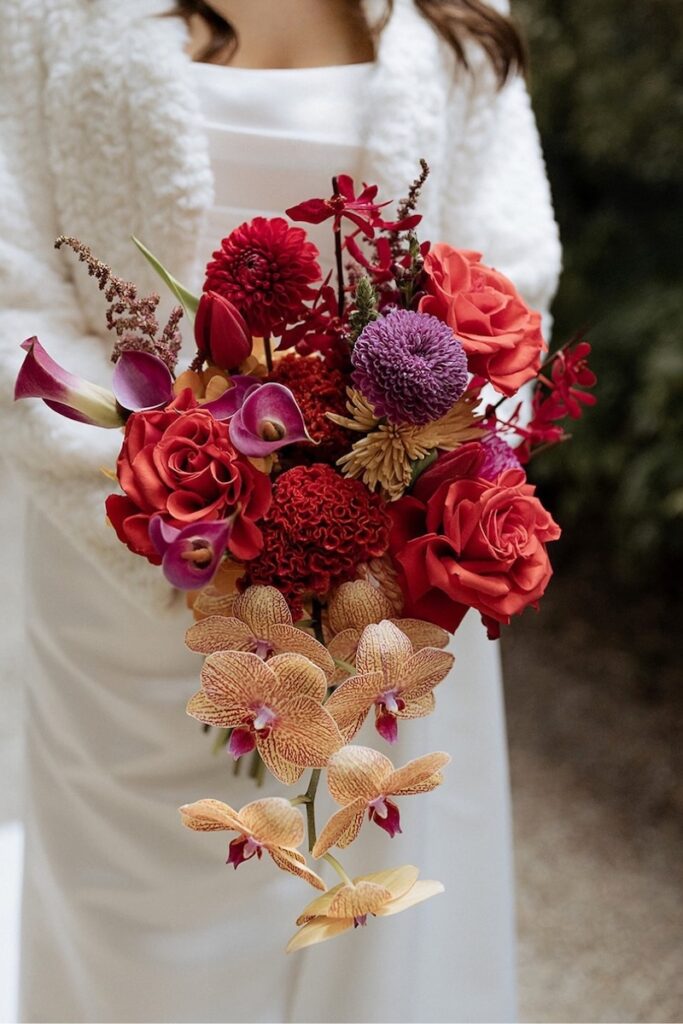
Buttercream might deepen into golden yellow. Pale peach can move through apricot and burnt orange. Blush might meet raspberry, burgundy and deep wine.
The result feels nuanced rather than matchy-matchy.
What wedding flower colours are trending for 2027?
Warm, expressive colour stories are particularly compelling.
Butter yellow continues to feel fresh and optimistic, while peach, apricot and burnt orange bring warmth without necessarily reading as rustic. Reds and deeper berry tones can create something richer and more dramatic.
But rather than choosing a trending colour simply because it’s everywhere, start with a shade you genuinely love and ask your florist to build outwards.
Introducing several tones creates depth and can also give your florist greater flexibility when sourcing seasonal flowers.
4. The unexpected
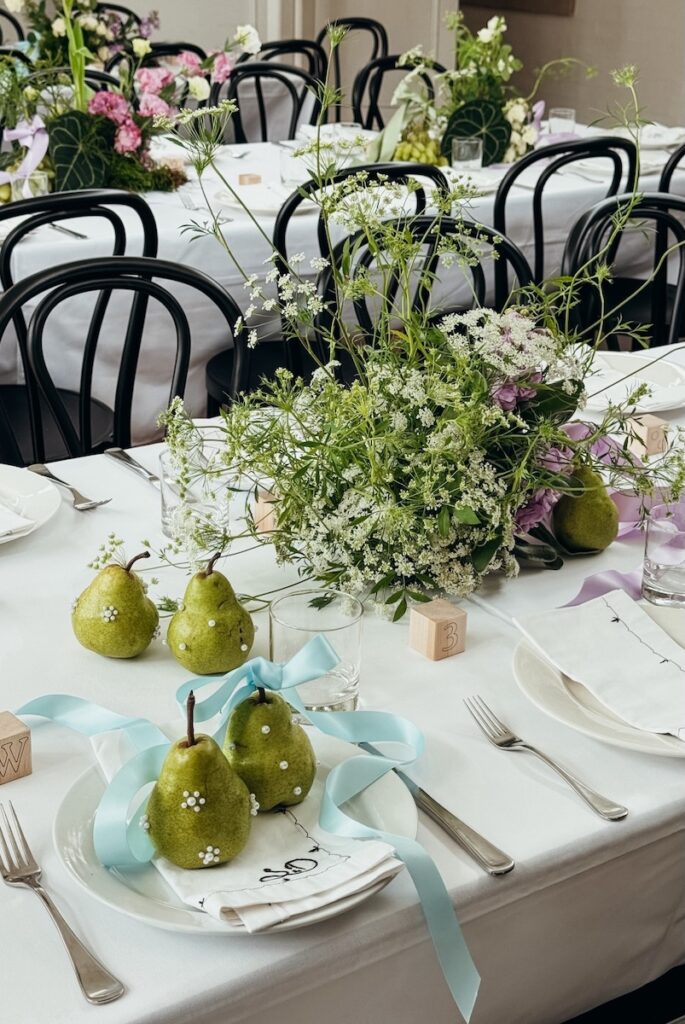
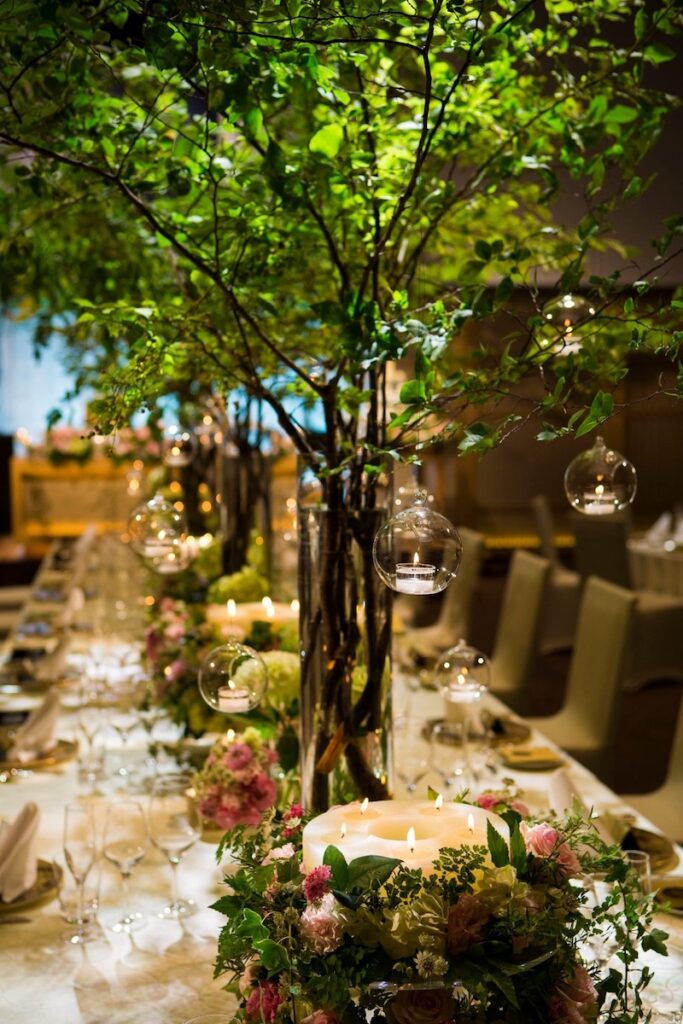
Flowers aren’t the only things making their way into wedding flowers.
One of the most playful wedding flower trends for 2027 sees florists incorporating unexpected natural ingredients into arrangements: fruit, vegetables, herbs, berries and sculptural branches.
Pears might tumble between flowers along a tablescape. Grapes can spill from compotes. Artichokes and cabbages introduce unexpected shape and texture, while citrus adds flashes of colour.
The look has something of the Dutch still-life painting about it — abundant, romantic and slightly decadent.
Why are fruit and vegetables appearing in wedding flowers?
Texture.
Traditional floral arrangements can sometimes become visually uniform, particularly when they’re dominated by flowers of a similar size. Introducing unexpected shapes creates contrast and gives the eye somewhere new to land.
Fruit can also reinforce a sense of season and place.
A summer table scattered with peaches feels entirely different from an autumn arrangement incorporating pears, figs or dark grapes. Herbs such as rosemary can bring fragrance as well as texture.
Used well, these elements make an arrangement feel richer and more considered rather than gimmicky.
5. One installation, two moments
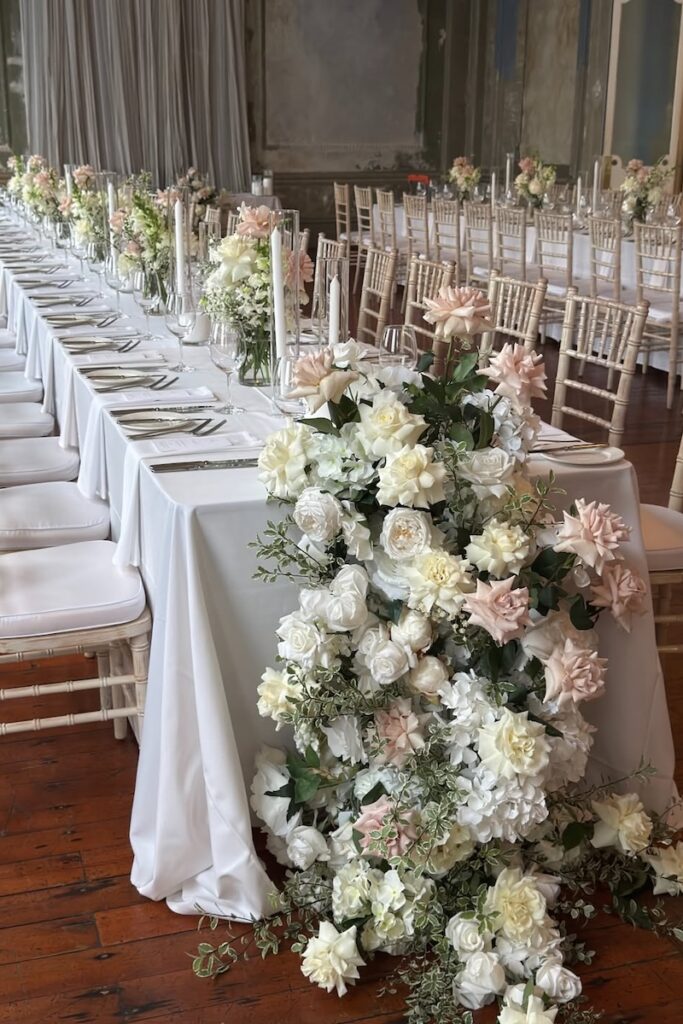
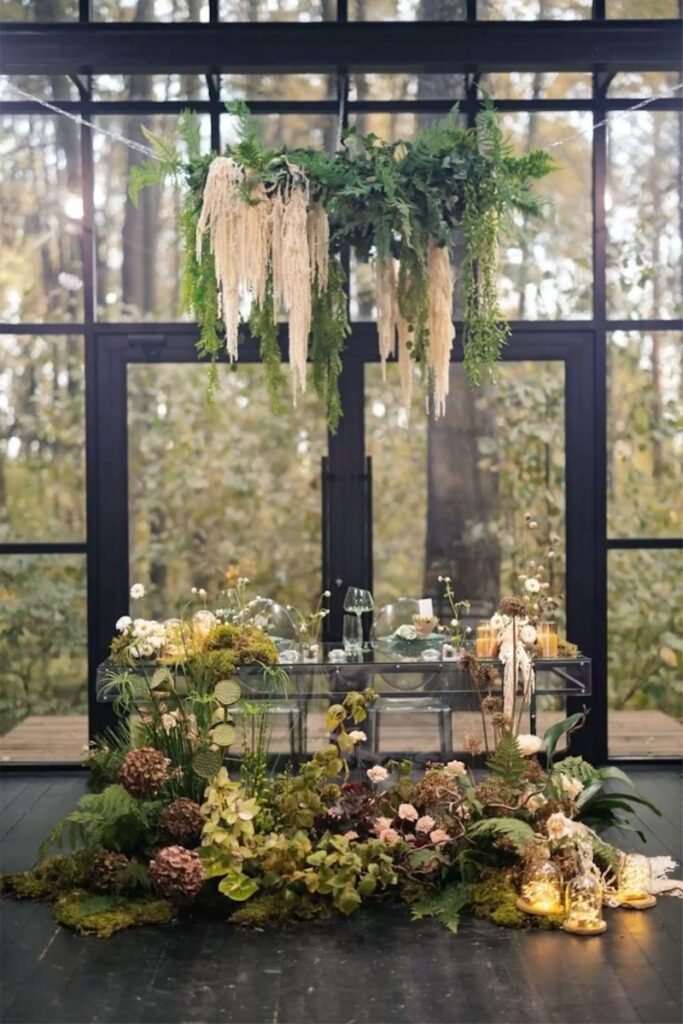
Some of the smartest wedding floral trends for 2027 aren’t purely aesthetic.
As couples become more conscious of both sustainability and wedding budgets, florists are increasingly designing arrangements to have more than one life throughout the day.
Instead of investing in flowers that will be seen for 30 minutes during the ceremony and then left behind, couples are considering from the outset how those flowers can move through the wedding.
A ceremony meadow could later frame the bridal table. A large arrangement beside the vows might become a bar installation. Aisle flowers could be repositioned around the reception entrance, cake table or dance floor.
It’s less about having fewer flowers and more about making the flowers you do invest in work harder.
Can wedding flowers really be repurposed?
Often, yes, but it needs to be planned.
Not every installation can simply be picked up and carried across a venue. Size, construction, water sources, transport time and access between spaces all affect what’s possible.
If repurposing matters to you, discuss it with your florist from the beginning.
They can design arrangements using vessels, modular structures or individual components that can be relocated relatively efficiently.
6. The return of the cascade
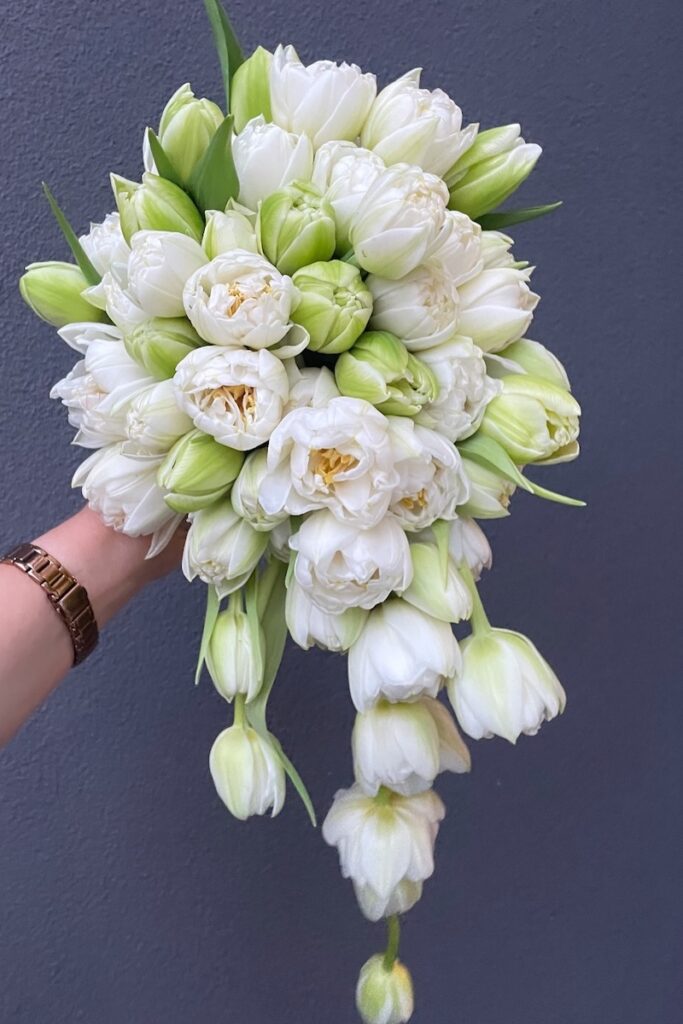
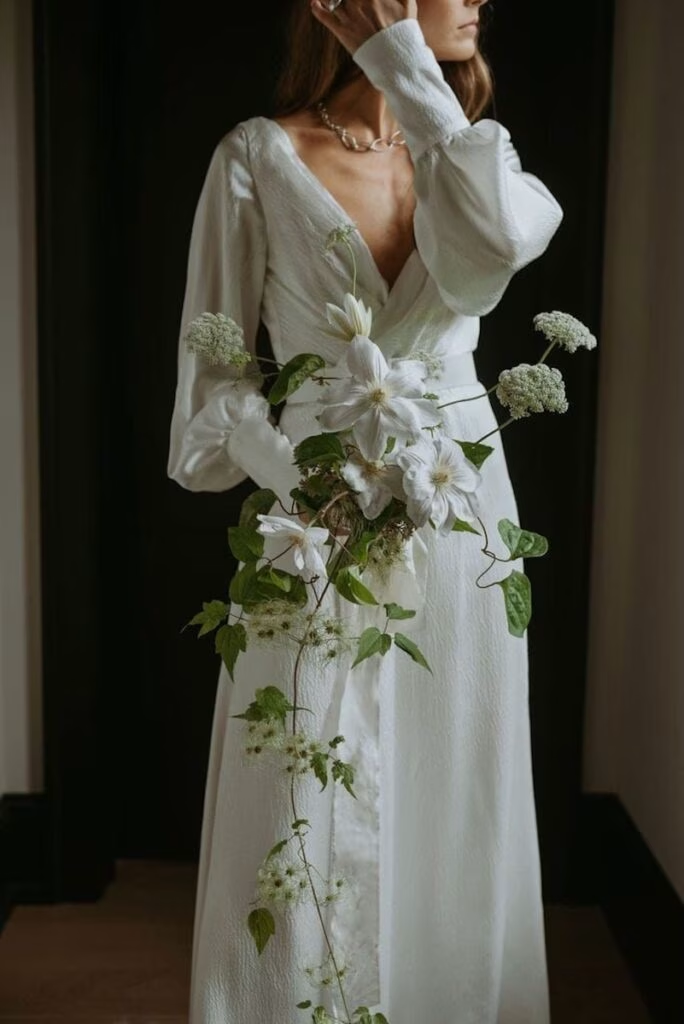
The cascading bouquet is making its way back, but forget the dense, teardrop-shaped arrangements of decades past. The 2027 version is lighter, looser and considerably more architectural, using negative space and trailing stems to create movement rather than sheer volume.
Orchids and amaranthus are particularly suited to the look, allowing flowers to fall almost effortlessly from the bouquet. Australian florists are already identifying modern cascades as a direction carrying into 2027, with asymmetry and movement giving the traditional shape a much more editorial feel.
For brides wearing clean, minimal gowns, the contrast can be especially beautiful: consider the bouquet less an accessory and more part of the silhouette.
7. The petite bouquet
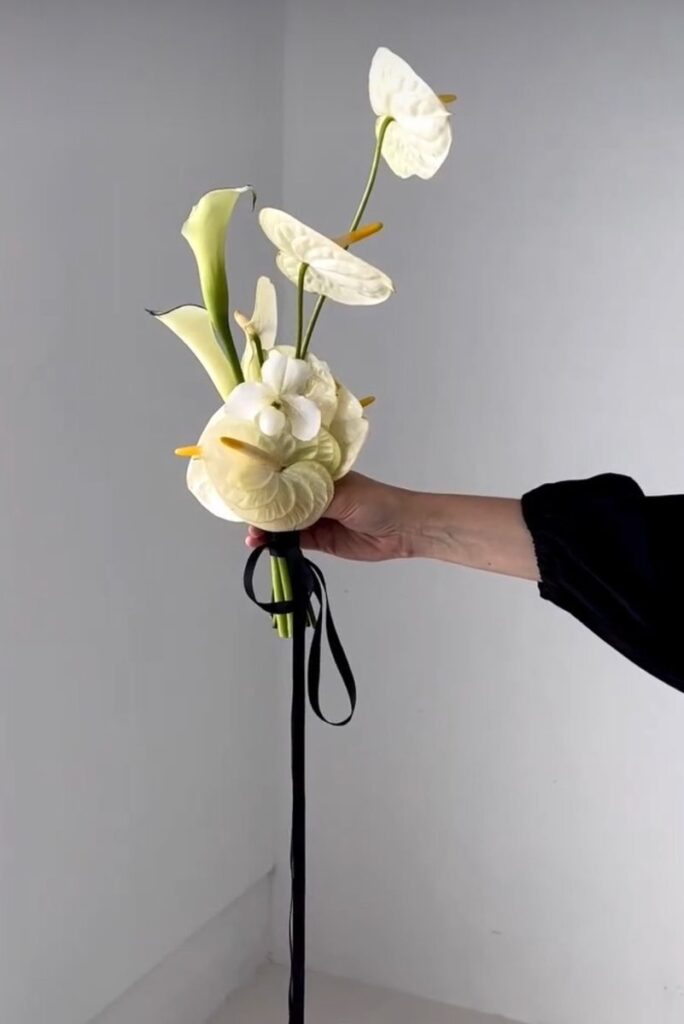
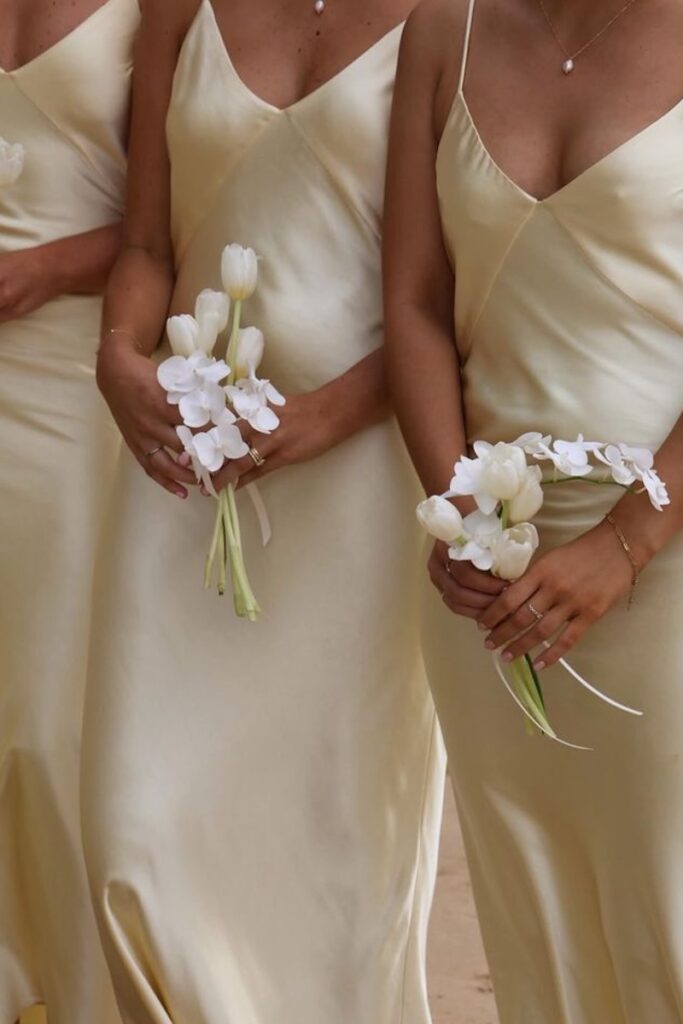
At the opposite end of the spectrum, bridal bouquets themselves are getting smaller.
Rather than carrying an enormous armful of flowers, we’re seeing tightly edited arrangements made from a handful of exceptional stems. One flower variety might dominate, or just a few sculptural blooms may be positioned with deliberate negative space between them.
It ties into a broader 2027 movement away from abundance for abundance’s sake. Florists are reporting more interest in sculptural, intentional arrangements, while current forecasts are also pointing towards monobloom bouquets using seasonal flowers.
There’s also a practical advantage: a petite bouquet allows the dress to remain very much part of the conversation.
8. Monobloom
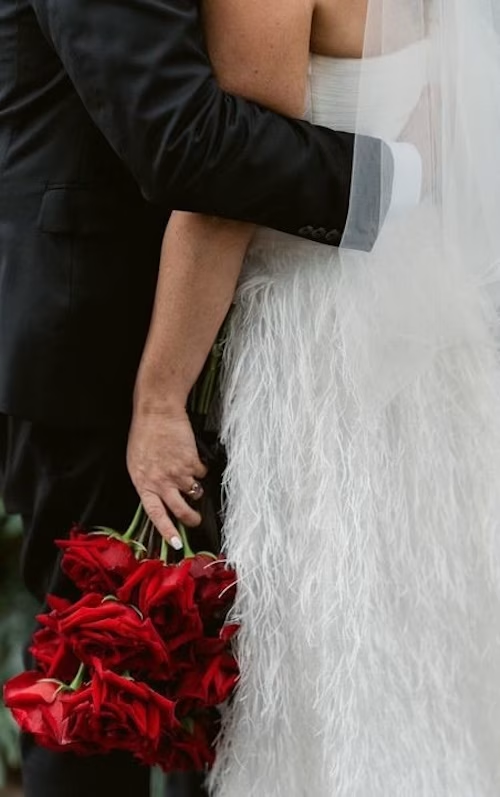
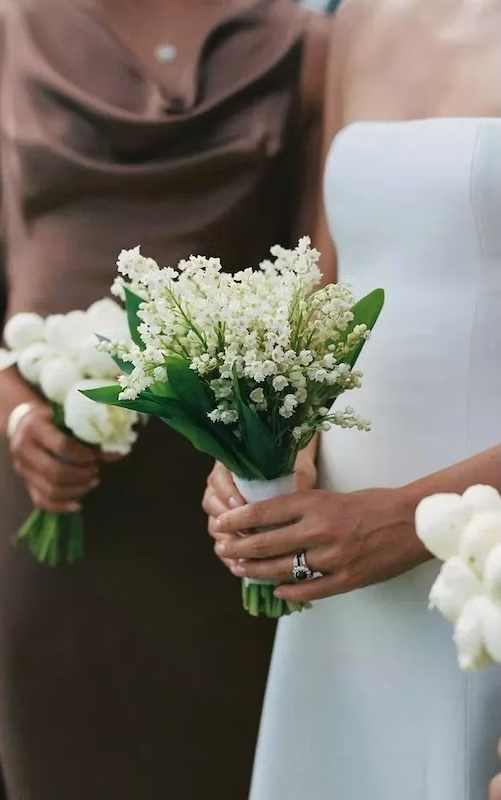
Roses with roses. Calla lilies with calla lilies. An entire bouquet of sweet peas.
Instead of relying on an extensive flower recipe to create interest, some of the chicest 2027 wedding flowers will make their impact through repetition.
The monobloom trend strips an arrangement back to a single flower variety, allowing shape, colour and quantity to become the statement. Current 2027 forecasts are specifically highlighting monobloom bouquets, while Australian florists are seeing monochromatic, tightly edited arrangements gain momentum.
It can be beautifully minimal — a handful of long-stemmed calla lilies, for example — or wonderfully maximalist, with masses of one bloom arranged en masse.
And despite its simplicity, monobloom doesn’t have to mean monochrome. Using several shades of the same flower can create extraordinary depth while maintaining that singular visual language.
Wedding Flower Trends 2027: FAQs
What are the biggest wedding flower trends for 2027?
Key trends are emerging for 2027: sculptural flowers used as art, wild garden-style arrangements, layered colour palettes, unexpected ingredients such as fruit and vegetables, and floral installations designed to be repurposed throughout the wedding.
What wedding flower colours will be popular in 2027?
Expect more colour and, importantly, more variation within colour palettes. Rather than selecting one exact shade, 2027 wedding flower colours will move tonally — think buttercream through golden yellow, or pale peach through apricot and burnt orange. This creates greater depth and a less rigidly coordinated look.
Are white wedding flowers still in style for 2027?
Absolutely. White wedding flowers are timeless and aren’t going anywhere. What is changing is how florists arrange them. White flowers can be made to feel distinctly contemporary through sculptural silhouettes, unexpected varieties, negative space and loose, garden-inspired arrangements.
What wedding bouquets are trending for 2027?
Wedding bouquets are becoming less structured and more expressive. Expect asymmetric arrangements, sculptural stems, trailing flowers and deliberately irregular silhouettes. Orchids, anthuriums, calla lilies and trailing amaranthus can all create the architectural shapes expected to influence wedding bouquet trends in 2027.
Are colourful wedding flowers coming back?
Yes. Florists expect colour to become increasingly prominent in 2027, particularly sophisticated tonal palettes rather than single-colour arrangements. Warm yellows, peaches, oranges, reds and berry tones can all be layered to create richer, more dimensional floral designs.
Can you reuse ceremony flowers at the reception?
Many ceremony arrangements can be repurposed, provided this is considered during the design process. Meadow arrangements may be moved behind a bridal table, for example, while aisle flowers could become bar or entrance arrangements. Discuss repurposing with your florist early so installations can be constructed appropriately.
How can I make my wedding flowers more sustainable?
Start by asking your florist about seasonal and locally grown flowers, reducing floral foam where possible and designing arrangements that can be repurposed between the ceremony and reception. You could also prioritise a smaller number of high-impact installations rather than decorating every area, and discuss whether flowers can be donated or taken home after the celebration.
How far in advance should I book a wedding florist?
Popular wedding florists can book well in advance, particularly during peak wedding seasons, so it’s worth beginning your search once you’ve secured your date and venue. You don’t need to know every flower you want before enquiring — establishing your overall aesthetic, approximate floral budget and key priorities is enough to begin the conversation.